The Reina Sofía Museum incorporates Alhacena, a new reception and rest area situated on the fourth floor of the Sabatini Building and forming part of the route of the Collection. Contemporary art: 1975–present. Designed by Jorge Penadés, Alhacena offers a new way of experiencing the museum: a place to take a break, read, chat, learn and meet up before continuing the tour of the galleries.
The project stems from an idea linked to everyday life. Its conception is inspired by the the kitchen as a space for care, conversation and shared life, bringing to the museum some of the qualities of these domestic spaces where people gather, exchange ideas and spend time. In this way, Alhacena introduces a more intimate and welcoming dimension to the museum experience.
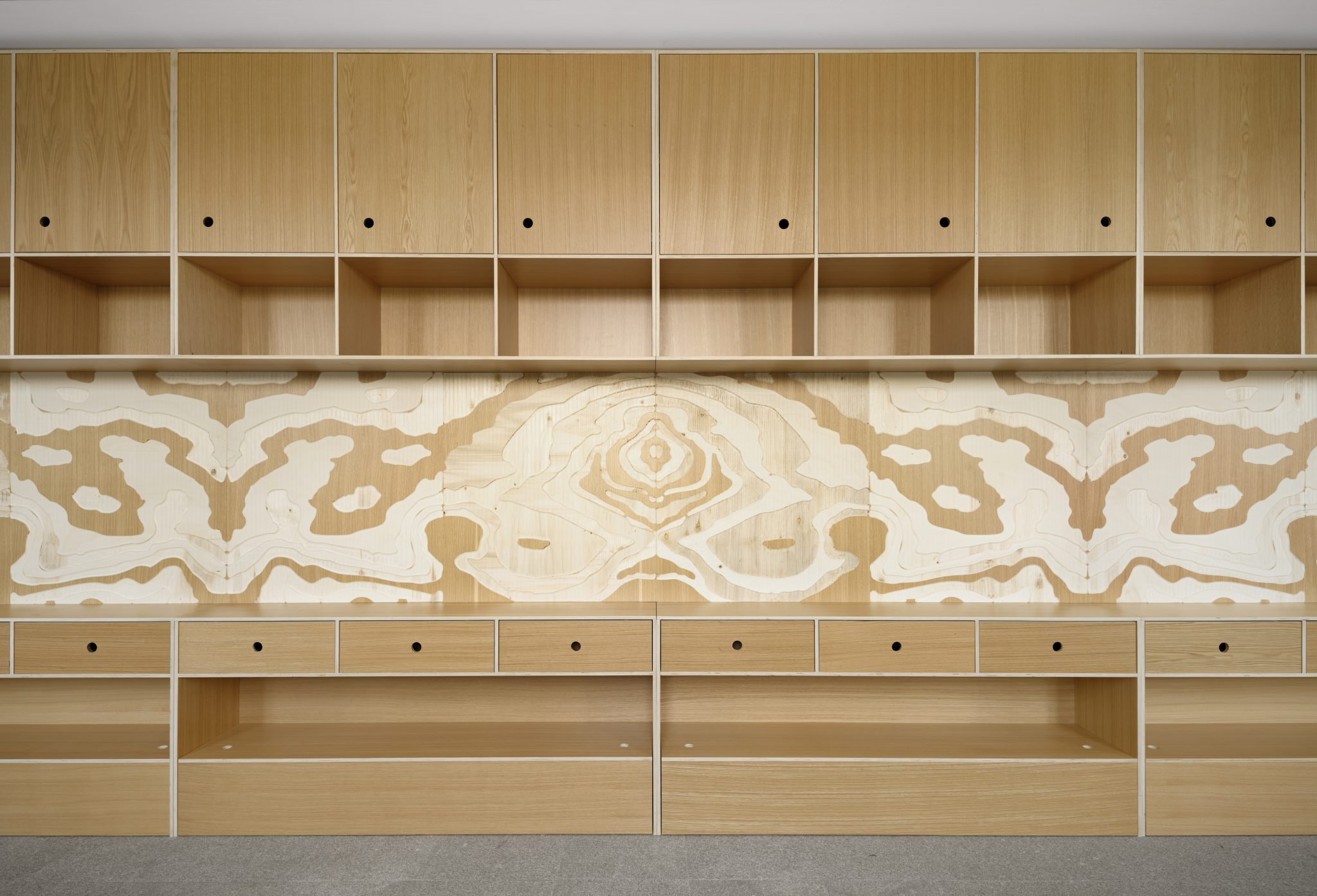
The proposal is structured around a modular, reorderable and reconfigurable structure, capable of adapting to different activities and ways of using the space. The space can be transformed to suit the needs of the museum and its visitors, providing a place for rest and conversation, but also for educational activities and new ways of coming together.
As Jorge Penadés explains, ‘Alhacena stems from a very simple idea: a place where people work, share, store things, chat and linger’. A definition that sums up the desire to create a space that is not merely a place to pass through, but a place to linger within the museum’s own exhibition route.
This intervention also reflects a way of understanding the Reina Sofía Museum as a place of hospitality and care. Beyond its role in preserving and exhibiting cultural heritage, the museum seeks to create environments that foster learning, exchange and the wellbeing of its visitors.
In the words of the director of the Reina Sofía Museum, Manuel Segade, “a museum should possess the grandeur of the state and the comfort of home”. Alhacena embodies precisely this coexistence between the institutional dimension of the museum and a more intimate, everyday and human experience.
The sustainability It is also part of the proposal. The large 29-metre-long cupboard that brings the whole ensemble together has been made from surplus production panels, incorporating principles of reuse and the circular economy into the design of the space.
The opening of Alhacena also coincides with a moment that is particularly closely linked to the dialogue between design, tourism, culture and hospitality. On 5 and 6 October, the Reina Sofía Museum will host the Tourism & Design Summit, an event that will bring together professionals from the tourism and creative industries in Madrid to reflect on the role of design in creating new experiences and spaces. Among the organising bodies is SIE, Spain Is Excellence .
In this context, Alhacena offers a concrete example of how design can transform the experience of a cultural space: not only in terms of its aesthetic dimension, but also in terms of its ability to to welcome, foster a sense of well-being, facilitate connections and create lasting memories.
With Alhacena, the Reina Sofía Museum It is expanding its offering for visitors and promoting the museum as a place where one can not only view art, but also to be, to find oneself, to learn and to feel welcome. An installation that invites visitors to pause and offers a more human and intimate way of experiencing the museum.