
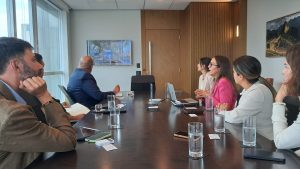
Spain is tapping into the luxury tourism market in Brazil and Argentina through SIE
SIE, Spain Is Excellence, brought Spanish excellence to Brazil and Argentina with a trade mission that connected its


CONTACT
The congress, which brought together more than 200 people at the Real Casa de Correos in Madrid, was inaugurated by Antonio Martorell, Admiral Chief of Staff of the Navy, Alejandro Aznar Sainz, President of the Maritime Cluster and Juan Díaz Cano, President of the Royal Spanish Naval League. Once again, the 5th Congress has served to express the joint voice of a sector whose importance is unknown to Spanish society as a whole. This edition will be framed under the claim "The blue future" with the aim of providing a global vision of the Spanish maritime sector and the main innovations that are emerging in it, as well as analysing the challenges and opportunities in the industry and highlighting its role as an engine of economic growth in the country.
The Admiral General Antonio Martorell, Chief of the General Staff of the Navy said that "all of us who are taking part in this congress share the responsibility of making Spaniards aware of the importance of the sea, the benefits it offers us and the opportunities and challenges we have ahead of us, because the sea is a key element in the history of Spain".
In order to encourage Spaniards to make proper use of the sea, as an open and free space that brings so many benefits but which at the same time makes it a difficult space to control, presenting numerous risks and threats to security, "the Navy maintains its secular mission unchanged, which is none other than the defence of Spain and its legitimate interests in and from the sea. The Navy is in a continuous process of adaptation, which we want to focus on recovering the ground lost in the last 15 years, in order to modernise and evolve our naval force in the medium and long term," Martorell pointed out.
The Chief of the Naval Staff explained that "the combination of resources and clear ideas will allow a strategic and more efficient management of resources and we hope that it can offer the naval industry and defence a clear guide and horizon that will contribute to position it in the European and global market. It is important to continue to defend the idea of dealing with maritime affairs from a global point of view, boosting our blue economy and its growth. Spaniards need to look more towards the sea and also towards its security and defence, as our well-being, progress and prosperity depend on it now more than ever," he said.
During the opening ceremony Alejandro Aznar, President of the Spanish Maritime Cluster highlighted the importance of the Spanish maritime sector for the economy and national security. "A vital sector that, nevertheless, does not enjoy the recognition it deserves and, with it, the institutional support that we should have", he pointed out.
Aznar stressed that the blue economy is essential for national security, as it is responsible for transporting a large part of imports and exports. It is also essential for the global economy, being key to sustainable development and the fight against climate change as it is one of the most efficient transports from an environmental perspective. "However, despite its obvious strategic importance, the blue economy has often been ignored by the public administration, when it is not lost in the web of institutions, both at a jurisdictional and geographical level, whose policies have an impact on maritime industries," he said.
This is why the cluster is calling for the creation of an entity capable of centralising everyone's interests. A state body that should be able to coordinate all policies and programmes related to the blue economy in Spain, thereby ensuring that the necessary measures are taken to support its growth and sustainable development.
A request that has been defended by Juan Díaz Cano, President of the Spanish Royal Naval LeagueDíaz Cano, who called for this congress to serve to open up the sea to Spanish citizens who are unaware of the real repercussions of a sector that contributes 7% of the GDP and sustains 6% of national employment. Díaz Cano also calls on the government to give the sector more weight in its policies. The abandonment of the public authorities towards the sea is notorious," he said, "no political party has ever included any measure in favour of the maritime industries in its electoral programmes. Let us hope that this congress manages to open the door that allows Spaniards to get to know the maritime sector in depth and also that the public authorities begin to pay attention to the yearnings for the future and the demands, some of them historical, of this sector that deserves the opportunity to develop on an equal footing with those of countries in our immediate vicinity".
During the round table "Towards a renewed navy" moderated by Jose Antonio Fernández Jove, general director of the Fernández Jove Group, an analysis was made of how the sector has evolved in recent years with new developments such as autonomous vehicles, V6A reality, modelling and simulation, artificial intelligence, cybersecurity, robotics, blockchain and how these changes will affect maritime industries.
During the round table, reference was also made to the scenario that has emerged following Russia's invasion of Ukraine. In this regard, Antonio Martorell, Admiral of the Navy's Chief of Staff, pointed out how this invasion has changed the international scenario in an immediate preventive way, keeping international security and defence organisations united. "This is what Russia is trying to weaken," he said. On the investment that the government will allocate to the Navy, Martorell pointed out the executive's commitment to increase the budget by 2%, although he stated that "we must be pragmatic".
Martorell also referred to the Navy's main programmes, the most immediate and one of the most relevant: the S80 submarines. "Spain joins the exclusive club of countries capable of designing, building, supporting and operating its own submarines, which is called strategic autonomy".
In this regard, Agustín Álvarez Blanco, Navantia's Director of Shipbuilding, pointed out that "we see a modern, technological navy that is fully aligned with the industry. Thanks to the navy, our products are internationally successful because they are one step ahead. The technological vectors that the navy is betting on, such as critical technologies, 5G, Artificial Intelligence and nanotechnology, among others, push us to adopt cutting-edge designs and technology".
Ignacio Mataix, CEO of Indra, referred to the challenges facing the industry, "our main challenge is to provide our navy with technologically advanced systems that help it maintain its superiority in the face of threats. It is key for the future to develop highly competitive systems that have projection in international markets".
Francisco Cuervas, CEO of Ghenova, stressed the importance of internationalisation as a key factor for diversification and as a stabilisation of the workload so as not to depend solely on domestic demand. Cuervas pointed out the importance of the Spanish brand in the naval industry. "Spain projects confidence and solvency and, whether for defence projects or not, it is a guarantee".
Iñaki Arbulu, managing director of the Arbulu Group moderated the round table in which the situation of the Spanish fishing sector in Brussels was analysed and the appeals presented on the limitations of bottom trawling in the 87 fishing grounds were assessed.
In this sense, Javier Garat Pérez, secretary general of the Spanish Fishing Confederation (Cepesca) points out that the industry feels "constantly under attack". Garat explained that we have a policy that is more focused on environmental policies than on the needs of the sector. "What they are demonstrating with their policies is that if they continue in this way they will take us into a tailspin. We have to find a balance between the conservation of biodiversity, but also the sustainable use of natural resources and of course food security. There are many industries in the maritime sector, but the only one that produces food is us.
Juan Manuel Vieites Baptista de Sousa, president of the Confederation of Galician Businessmen (CEG), explained "that the Spanish government, under pressure from the sector, made an appeal which it presented in November and which we understand has all the reasoning related to the fishing sector. It is difficult to understand why they are banning 87 fishing zones and I believe that Brussels does not believe in the fishing sector, they are not committed to a strategic cohesion sector in the European Union and that is what is causing us to have all the problems we have. Brussels is more concerned about the environment than about the fishing sector itself".
This opinion is shared by Basilio Otero, president of the National Federation of Fishermen's Guilds, who pointed out that despite the obstacles "the Spanish fishing sector has a future and we will continue to fight, although to do so we will have to change the common fisheries policy".
The programme of conferences dealt with the most innovative issues and with the greatest projection, such as the ports of the future, the protection of Spanish underwater heritage, the reality of Spanish shipyards and auxiliary industries, blue fuels, floating offshore wind power, maritime training, the recreational marine and sustainability, the role of the Naval Leagues in the maritime sector, the merchant marine after COVID-19 and the blue economy.
Following the congress, a "Conclusions Booklet" will be prepared and sent to the government, political parties, the press and maritime associations, containing the conclusions drawn from the congress.
During the congress, the participation of the sponsoring and collaborating companies was also acknowledged: Navalia as main sponsor, Bureau Veritas, Grupo Arbulu, Siport21, Ghenova, Fernández Jové and the Chair of the Spanish Maritime Cluster of the Higher Technical School of Naval Engineers of Madrid, Indra and Pesca España. Grupo Suardíaz, Astilleros Armón, Wilmer Representaciones (Wiresa), Balearia, Universidad Camilo José Cela, Alta Shipping, Técnicas y Servicios de ingeniería (TSI), Astican-Astander, Anesco, Ingeteam, Comismar, Islaw Abogados, Inmobiliaria Hispana, España S.A., Ocean Capital Partners, Warsila, Navantia, Frizonia, Iberdrola, the insurance company España, S.A. and the Asociación de Ingenieros Navales y Oceánicos de España. Many thanks to all of them.
Spain is tapping into the luxury tourism market in Brazil and Argentina through SIE
SIE, Spain Is Excellence, brought Spanish excellence to Brazil and Argentina with a trade mission that connected its
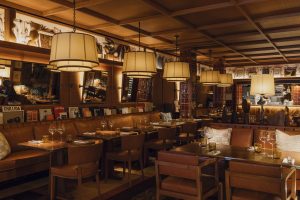
Brach Madrid reinterprets tradition with its Black Angus beef cheek
Brach Madrid Restaurant reinterprets traditional cuisine with its Black Angus beef cheeks, a dish created by Eugenio Fragomeni that combines charcoal grilling,

Finca Althaya: regenerative agriculture and wellbeing at ZEM
With over 200,000 m² of organic land and more than 60 varieties grown, Finca Althaya combines regenerative agriculture with gastronomy

